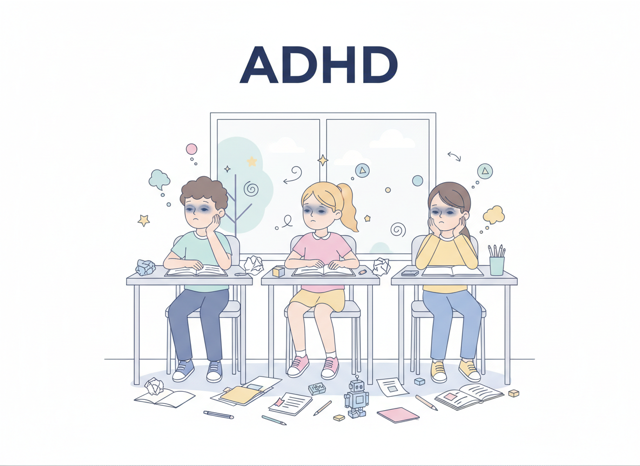
ADHD in Children: Symptoms, Assessment, and Support
Learn how ADHD may look in children, common symptoms, how assessment works, and what support options can help at home and at school.
ADHD (Attention-Deficit/Hyperactivity Disorder) is a neurodevelopmental condition that affects attention, impulse control, and activity level. It is not a “phase” or a matter of willpower or parenting. Symptoms are typically long-lasting, appear in more than one setting (e.g., home and school), and can significantly affect daily functioning.
This article is educational and cannot replace an individual clinical assessment.
What are the main ADHD symptoms?
ADHD symptoms are commonly grouped into three areas:
- Inattention: distractibility, difficulty sustaining focus, losing things, forgetfulness, trouble following instructions
- Hyperactivity: restlessness, difficulty sitting still, excessive movement or talking
- Impulsivity: acting before thinking, interrupting, difficulty waiting, emotional outbursts
Some children show more hyperactivity/impulsivity, while others mainly struggle with inattention and may appear “dreamy” or “absent.”
When should parents consider an assessment?
Consider an assessment if difficulties:
- last for months
- are present in more than one environment (home, school, activities)
- lead to impairment (learning difficulties, conflicts, low self-esteem, social problems)
Early recognition and support can reduce secondary difficulties such as academic failure, family stress, and emotional problems.
How does ADHD assessment work?
Assessment is based on symptoms and functioning and often includes:
- A clinical interview with the child/adolescent and parents
- Information from school (multi-informant approach)
- Observation – symptoms may not always be visible during the appointment
- Psychological testing when indicated
It is also important to consider differential diagnosis, because attention problems can occur with anxiety, depression, learning disorders, sleep problems, trauma, or high stress.
ADHD often co-occurs with other difficulties
Many children with ADHD also experience:
- Specific learning difficulties
- Anxiety or low mood
- Tic disorders
- Behavioral difficulties
That is why assessment should not only answer “Is it ADHD?” but also clarify what else may be contributing and what is most burdensome for the child and family.
Treatment and support: a multimodal, individualized plan
- Psychoeducation for the child and parents
- Behavioral and cognitive interventions
- Psychotherapy when indicated
- Parent guidance and family support
- School-based accommodations
- Medication when clinically indicated, as part of a broader plan
Practical tips for home and school
- Aim for structure: predictable routines and clear expectations
- Break tasks into smaller steps
- Praise effort and small improvements
- Reduce distractions during homework
- Coordinate with school to align strategies and expectations
FAQ
Is ADHD “overdiagnosed” or not real?
ADHD is a well-established diagnosis defined by clinical criteria. The key is careful assessment of symptoms and functional impairment.
Is medication the only solution?
Usually not. Many children benefit most from a multimodal plan (skills, family support, school strategies), with medication considered when indicated.
Can anxiety look like ADHD?
Yes. Anxiety can reduce concentration and mimic inattention, which is why differential diagnosis matters.