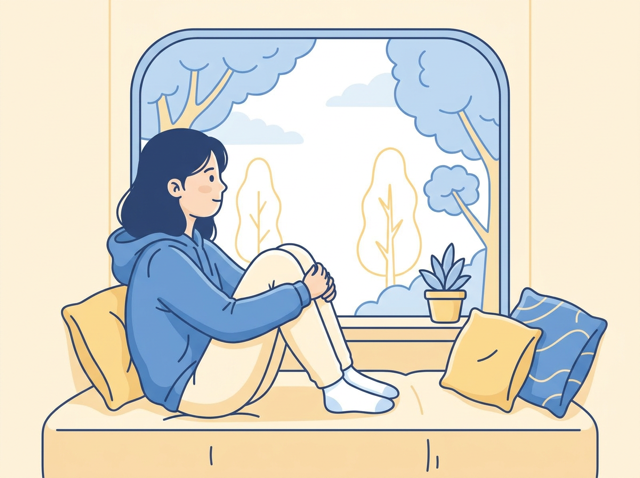
Depression in Children and Adolescents – How to Recognize It and What to Do
Depression in children and adolescents is real and treatable. Learn to recognize the signs, understand the causes, and find out how to help your child today.
Introduction
Depression is not just a bad mood. It is not a phase, and it is not simply part of growing up. Depression is a serious mental health disorder that affects how a young person thinks, feels, and functions — every single day. Left untreated, it can disrupt learning, damage relationships, and in the most severe cases, lead to substance abuse, self-harm, or suicide.
Adolescence is undeniably challenging. Hormonal shifts, social pressures, academic demands, and questions of identity make it a genuinely difficult time for many young people. But difficulty is not the same as illness. Parents and caregivers deserve to know the difference — and to know that effective help exists.
This guide was written to help you understand what depression in children and adolescents actually looks like, why it happens, and what you can do about it. Whether you are worried about your child, your teenager, or a young person in your care, you will find practical, evidence-based information here that you can act on.
How Common Is Depression in Children and Adolescents?
Depression in children and adolescents is far more common than most people realize — and far less frequently treated.
Among school-age children, approximately 2% meet the criteria for a depressive disorder, with the condition appearing equally across boys and girls at this age. The picture changes significantly during adolescence. Among teenagers, estimates range from 4 to 8%, and girls are roughly twice as likely to be affected as boys — a gap that emerges around puberty and persists into adulthood.
Perhaps the most sobering figure is this: only about one in five depressed young people receives any form of professional treatment. The rest suffer in silence, often without their families or teachers recognizing what is happening. This is not because parents do not care. It is because depression in young people often looks very different from what adults expect.
Signs of Depression in Children
Child depression symptoms can be easy to miss, particularly because children lack the vocabulary or self-awareness to say “I feel depressed.” Instead, the signs often show up indirectly.
A depressed child may appear persistently sad, with a flat or monotone voice and slowed movements. They may seem withdrawn or unusually lonely, retreating from activities and friendships they once enjoyed. Irritability is extremely common in younger children — rather than appearing sad, they may be easily frustrated, prone to outbursts, or seemingly bored all the time (a sign of anhedonia, the inability to feel pleasure).
Other signs in children include:
- Poor concentration and a noticeable drop in school performance
- Behavioral problems that seem out of character
- Excessive self-criticism — children with depression often blame themselves harshly for small mistakes
- Physical complaints without a clear medical cause — stomach aches, headaches, and general physical discomfort are among the most common presentations of childhood depression, and they are genuine; the pain is real, even when no physical cause is found
- Thoughts about death, expressed directly or through play, drawing, or writing
- Actual suicide attempts are rare in young children, but thoughts of death are not uncommon and should always be taken seriously
When these signs last for more than two weeks and interfere with the child’s daily life, it is time to seek professional guidance.
Signs of Depression in Adolescents
Depression in adolescents shares some features with childhood depression but more closely resembles the adult presentation. Teen depression symptoms often include:
- Persistent sadness, emptiness, or apathy
- Loss of interest in things that once brought pleasure — hobbies, friendships, sports
- Low energy and chronic fatigue, even after a full night’s sleep
- Changes in sleep (often sleeping much more than usual) and changes in appetite
- Preoccupation with appearance or a sudden indifference to how they look
- Feelings of hopelessness and worthlessness
- Suicidal thoughts or talk about not wanting to be alive
However, the clinical picture in teenagers is frequently masked by other behaviors. Aggression, rule-breaking, and resistance to authority can all be expressions of depression in adolescents, particularly in boys. Low self-esteem often manifests as harsh self-talk: “I’m stupid,” “I’m ugly,” “nobody cares about me.”
Some adolescents attempt to manage their pain through substances — alcohol or drugs — as a form of self-medication. This is not a sign of bad character; it is a sign of suffering that has gone unaddressed.
Teenagers can also present with what clinicians call atypical symptoms: sleeping far more than usual (hypersomnia), increased appetite rather than decreased, intense sensitivity to rejection or criticism, and a heavy, leaden feeling in the body. These presentations are easy to confuse with laziness or teenage moodiness, which is exactly why professional assessment matters.
How Does Depression in Young People Differ from Adult Depression?
Understanding the differences between youth and adult depression helps parents and caregivers know what to look for.
Irritability, not sadness, is often the dominant mood. While adults with depression typically describe feeling sad or empty, children and teenagers are more likely to appear irritable, snappy, or angry. This can make it harder to recognize as depression — frustration with a “difficult” child may get in the way of seeing the suffering underneath.
Physical pain is more prominent. Headaches and stomach aches are hallmark features of depression in young people. When a child repeatedly visits the school nurse or asks to stay home due to physical complaints that have no medical explanation, this deserves careful attention.
Sensitivity to criticism is heightened. Adolescents with depression — particularly those who are perfectionistic — may react to ordinary feedback with what seems like extreme distress. This is not simply oversensitivity; it is a symptom.
Social withdrawal is selective. Depressed adults often pull back broadly from social life. Depressed teenagers may withdraw from parents and family while maintaining some peer relationships. This can mislead parents into thinking things are fine because their child “still has friends.”
Causes and Risk Factors
Depression is not caused by a single factor. It develops through a combination of biological vulnerabilities, psychological patterns, and life experiences.
Genetic and biological factors play a significant role. A young person with one depressed parent has an estimated 15 to 45% greater risk of developing depression themselves. Brain chemistry — particularly the functioning of neurotransmitter systems — and structural brain differences are involved. Hormonal changes during puberty, including elevated cortisol and changes in sex hormones, also contribute to increased vulnerability during adolescence.
Psychological and relational factors include:
- Chronic stress and emotional overload
- Poor parent-child relationships, including experiences of abuse or neglect
- Disturbed family dynamics — ongoing marital conflict, domestic violence, or emotional unavailability
- Loss of an important person, whether through death, divorce, or estrangement
- Peer bullying and social exclusion
- Lack of meaningful social support
- Low self-esteem and negative thinking patterns
Social and environmental factors also matter:
- Low socioeconomic status and family financial stress
- Academic pressure without adequate support
- Physical illness, chronic pain, or disability
Depression is a health condition with real biological underpinnings — it is not a choice, a weakness, or a parenting failure.
Protective Factors
The most powerful protective factors for children and adolescents include:
- Warm, consistent parental care and support — the single most important buffer against depression
- Self-confidence and a healthy sense of self-worth
- Strong social skills and meaningful friendships
- Effective strategies for managing stress — the ability to identify emotions, ask for help, and regulate distress
- Faith, spirituality, or a sense of meaning and connection to something larger than oneself
Consequences of Untreated Depression
When depression in children or adolescents goes unrecognized and untreated, the effects extend far beyond sadness.
Academic consequences are often the first visible sign — increasing absences, falling grades, and eventual disengagement from school. Some adolescents run away from home — a cry for help that is frequently misread as defiance.
Substance use is a serious risk. Alcohol and drugs may bring temporary relief but worsen the underlying depression and create additional health and social problems. Internet addiction can develop as another escape mechanism, deepening isolation rather than relieving it.
Low self-esteem can become chronic and entrenched. Risk-taking behaviors — reckless driving, unsafe sexual activity, physical confrontation — are more common in depressed adolescents.
Untreated depression also significantly increases the risk of developing comorbid conditions, including:
- Self-harm and non-suicidal self-injury
- Eating disorders
- Anxiety disorders
- ADHD (or worsening of existing ADHD)
- Conduct disorder
Course and Outcome
A typical depressive episode in children or adolescents lasts an average of 7 to 9 months. The encouraging news is that 90% of young people recover within 18 to 24 months, particularly when they receive appropriate treatment.
However, depression has a strong tendency to recur. Around 50% experience a relapse, approximately 40% have a new depressive episode within 2 years, and 70% within 5 years. A smaller group — around 6 to 10% — develops a chronic course.
A depressive episode during adolescence increases the likelihood of depression in adulthood — making early intervention an investment in long-term mental health.
Treatment of Depression in Children and Adolescents
For mild depression, the first-line approach is psychotherapy — most commonly Cognitive Behavioral Therapy (CBT) or psychodynamic therapy — combined with psychoeducation for both the child and their parents.
For moderate to severe depression, a combination of psychotherapy and pharmacotherapy produces the best outcomes.
SSRIs (selective serotonin reuptake inhibitors) are the first-choice pharmacological treatment. Antidepressants are typically continued for a minimum of 6 months after remission to reduce the risk of relapse.
Important: SSRIs may, in some young people, increase suicidal ideation — particularly in the first weeks of treatment. They do not increase the risk of completed suicide. Careful monitoring during this initial period is essential. Side effects in children can include nausea, vomiting, and behavioral activation.
Treatment duration is typically 6 months to 1 year, though complex cases may require 2 to 3 years.
The most effective treatment model is multimodal: psychoeducation for the young person and family, individual psychotherapy, medication when indicated, and active parental involvement.
What Can Parents Do?
- React when warning signs persist beyond two weeks
- Talk without judgment — use specific observations: “I’ve noticed you seem really withdrawn lately. I’m worried. Can we talk?”
- Be patient and persistent — keep the door open even after refusals
- Consult a professional — pediatrician, child psychiatrist, or school psychologist
- Encourage physical activity — walking, cycling, sport have genuine antidepressant effects
- Support social connection — facilitate opportunities for peer contact
- Be involved in treatment — attend family sessions, monitor medication adherence
- Educate yourself about depression as a condition
Tips for Talking to a Depressed Child or Adolescent
Offer unconditional support. “I’m here for you. Whatever is going on, we will get through it together.”
Be gentle and persistent. Come back. Let your child set the pace.
Listen more than you speak. Advice offered too quickly sends the message that you are not fully hearing them.
Validate their experience. “I can see you’re really struggling right now, and I’m glad you told me.”
Avoid dismissive phrases: “cheer up,” “just try harder,” “it’s just a phase,” “you’re too young to be depressed.”
The goal is not to fix everything in one sitting — it is to make your child feel less alone.
Frequently Asked Questions
Is depression in children and adolescents just a phase that will pass on its own?Sometimes sadness resolves on its own, but clinical depression — lasting two weeks or more and affecting daily functioning — benefits greatly from professional support. When in doubt, seek assessment.
When should I seek professional help for my child?When symptoms have persisted for two weeks or more, when functioning at school or home has noticeably changed, or when there is any talk of death or self-harm. You do not need certainty — seeking an assessment is responsible parenting.
Does my child or teenager need medication?Not necessarily. Many young people respond well to psychotherapy alone. Medication is considered when depression is severe, persistent, or when therapy hasn’t produced sufficient improvement. Always prescribed and monitored by a doctor.
How do I talk to my child about depression without making things worse?Talking about depression does not make it worse — silence does. Lead with concern, listen more than you speak, validate their feelings, and reassure them that this is not their fault and that help is available.
Can a child or teenager recover fully from depression?Yes. Approximately 90% of young people with depression recover within 18 to 24 months. With appropriate treatment, recovery can happen sooner and the risk of relapse can be significantly reduced. Full recovery is absolutely achievable.
Disclaimer
This text is intended for educational purposes only and does not constitute a professional clinical assessment or individualized treatment recommendation. If you are concerned about a child or adolescent in your care, please consult a qualified healthcare professional.
Poliklinika Golden Mind is a specialized mental health clinic in Zagreb offering comprehensive psychiatric care, psychotherapy, and psychological assessments for children, adolescents, and adults. Contact us at info@poliklinikagoldenmind.hr or visit poliklinikagoldenmind.hr .
Sources
- Begovac I. et al.: Child and Adolescent Psychiatry (chapters on depressive disorders and pharmacotherapy in children and adolescents)
- Internal clinical materials, Poliklinika Golden Mind
- World Health Organization (WHO): Mental health of adolescents
- American Academy of Child and Adolescent Psychiatry (AACAP): Practice parameters for the assessment and treatment of children and adolescents with depressive disorders